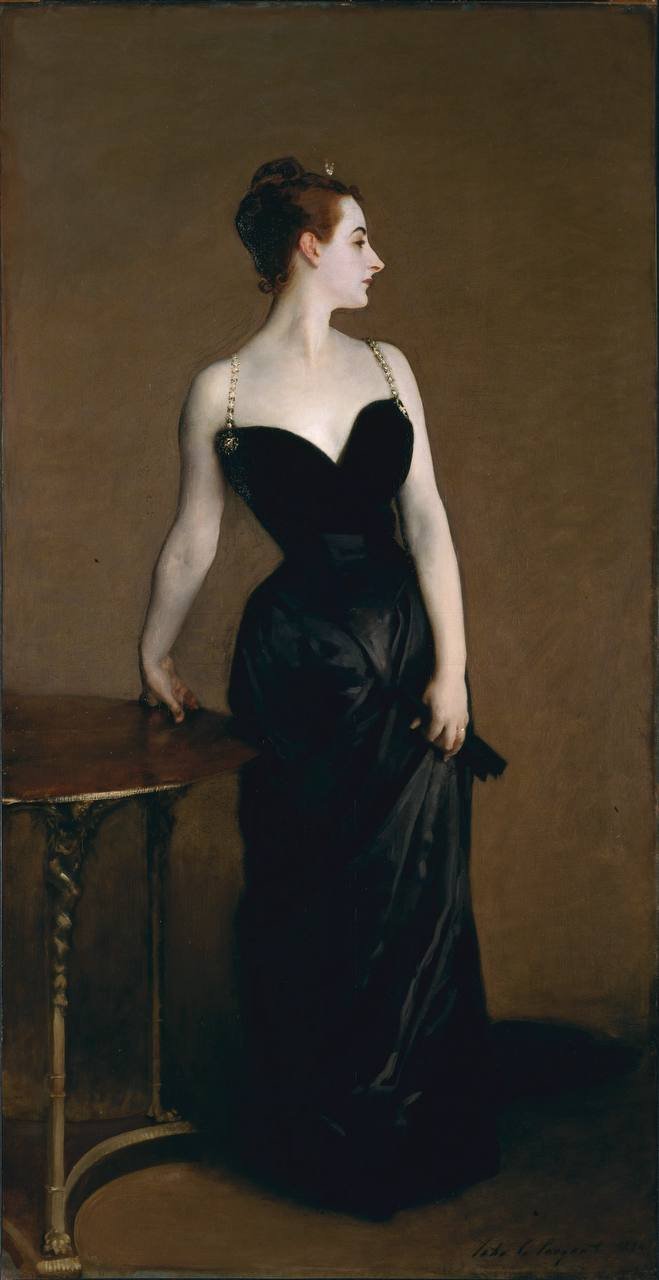
Portrait of Madame X (Madame Pierre Gautreau) — John Singer Sargent, 1884. Oil on canvas. Metropolitan Museum of Art, New York.
Born in New Orleans
Virginie Amélie Avegno entered the world at 927 Toulouse Street, daughter of Anatole Placide Avegno — an Italian-French Creole — and Marie Virginie de Ternant, descended from French nobility raised at Parlange Plantation.
A Father Lost at Shiloh
Major Avegno commanded the Avegno Zouaves — a famously cosmopolitan Confederate battalion of French, Spanish, Mexican, Irish, Italian, Chinese, German, Dutch, and Filipino soldiers. He was killed at the Battle of Shiloh. Amélie was three years old.
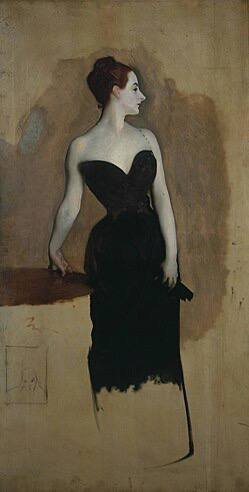
Preparatory study for Portrait of Madame X — John Singer Sargent, c. 1883
Paris Beckoned
At eight years old, Amélie and her mother fled the ruins of post-war New Orleans for Paris. Her sister Valentine had already been claimed by yellow fever the year before. She would never truly return to the city of her birth.
La Belle Madame Gautreau
At nineteen, she married Pierre Gautreau, a banker twice her age. Then she became Paris’s most conspicuous beauty — powdering her skin with lavender, consuming arsenic for pallor, dyeing her hair with henna. The press called her “a professional beauty.” She worked hard at it.
Sargent’s Obsession
John Singer Sargent, a young American expatriate desperate to make his name, sought her out. He wrote to a mutual friend: “I have a great desire to paint her portrait… you might tell her that I am a man of prodigious talent.” He offered to paint her for free. Two ambitious Americans, both betting everything on one canvas.
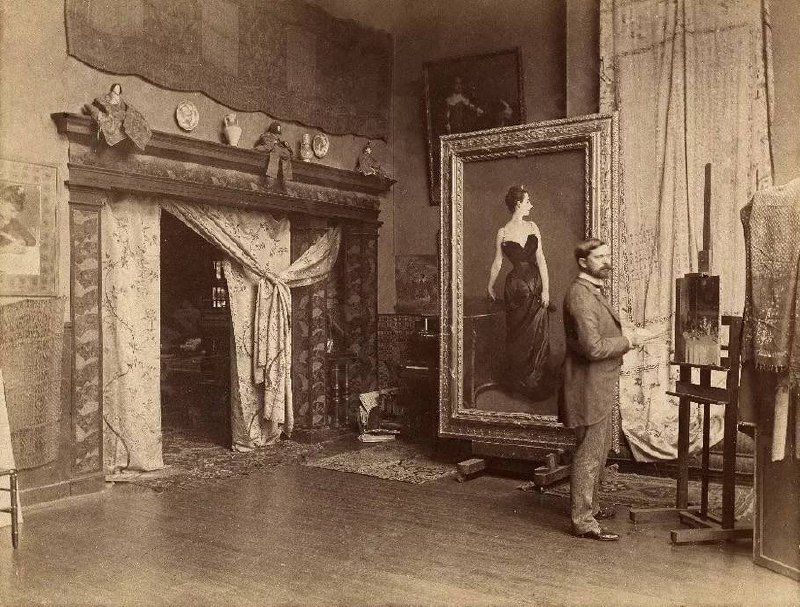
John Singer Sargent in his studio with Portrait of Madame X, c. 1884
The Scandal of 1884
At the Paris Salon, the portrait ignited fury. The fallen shoulder strap, the bare skin, the deathly pallor — critics said standing before it, one “would hear every curse word in the French language.” Gautreau’s mother begged Sargent to remove it. He refused. Both were driven into hiding.
A Masterpiece in Exile
Sargent repainted the strap, fled to London, and kept the painting for over thirty years. When he finally sold it to the Metropolitan Museum of Art, he had one instruction: “I should prefer that the picture should not be called by her name.” He called it simply “the best thing I have done.”
The New Orleans Mona Lisa
Now one of America’s most famous paintings — sometimes called “The New Orleans Mona Lisa” — it hangs on permanent display at the Met. And it all began here, at 927 Toulouse Street.